Most Commented
- Cubadebate opens its new Web page in English| 20
- Mandela is dead: Why hide the truth about Apartheid?| 11
- El Paso Diary: The Battle Over the Solo Fax| 10
- President Hugo Chavez's address to the People of Venezuela| 10
- Free the Five is heard at Left Forum| 6
- May every citizen be a constituent| 6
- Raúl receives Kim Yong Chol, Special Envoy of the President of the Workers’ Party of Korea| 6
- The Unsustainable Position of the Empire| 5
- U.S. government promoting Internet aggression against Cuba| 5
- NATO’s Genocidal Role| 4
- The Fiftieth Anniversary Parade| 4
- El Paso Diary: The Tip of the Iceberg| 4
Series
- Cuba's Reasons
- Cuban Five
- El Paso Diary
The El Paso Diary is written by José Pertierra--an attorney who represents the government of Venezuela in its request for the extradition of Luis Posada Carriles. Pertierra´s journals describe the testimony, evidence, legal skirmishes, quirks and follies of this very historic trial that features for the first time the close collaboration of the United States government with Cuban authorities to prosecute an ex CIA agent who is one of the masterminds of the fifty-year old dirty war against Cuba.
Authors
- Bernie Dwyer
- Bruno Rodríguez Parrilla
- Deisy Francis Mexidor
- Fidel Castro Ruz
- José Pertierra
- Raúl Castro Ruz
- Ricardo Alarcón de Quesada
- Amy Goodman
- Arleen Rodríguez Derivet
- Frei Betto
- Hugo Chávez Frías
- Josh R. Nelson
- Juan Gelman
- Luis Rumbaut
- Michael Moore
- Mumia Abu-Jamal
- Noam Chomsky
- Reinaldo Taladrid Herrero
- Richard Gott
- Tom Hayden
Articles of United States
News »
More than 50 organizations urge Biden to end hostile Cuba policy
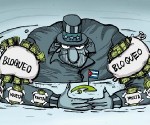
A letter from more than 50 U.S. social, religious and academic organizations has urged the administration of President Joseph Biden to fulfill his campaign promise and “reverse the failed Trump policies that inflicted harm on Cubans and their families.” The text advocates the initiation of a more constructive U.S. policy toward the island nation and the launching of legislative action to put an end to restrictions and take the path toward ending the blockade.
News »
In support of peace in Colombia: commitment, consistency and responsibility
The Embassy of Cuba in Colombia received information -whose credibility could not be assessed- in relation to an alleged military attack by the Oriental War Front of the ELN that would take place in the course of the next few days in Bogotá. The ELN’s Peace Delegation in Havana was immediately advised of said information. The ELN’s Peace Delegation claimed it was completely unaware.
News »
Peddlers of poison: María Elvira Salazar & Frank Calzón
The necessary clarification of the facts surrounding these cases has been demanded, along with laws to punish anyone causing harm to the species with which we share the planet, including those that accompany us in our immediate environments – about which positive reports have appeared recently in official media, indicating forthcoming implementation of new legislation.
News »
Millions for democracy made in USA
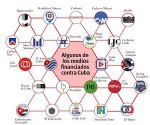
Although the effort has never produced the results expected by its organizers, subversion against Cuba continues to be a profitable business involving millions of dollars. Disguised in multiple trappings, through agencies, companies and organizations, which rarely offer public information on the management of their funds, the financing of actions intended to undermine the Revolution have exceeded 249.5 million dollars, over the last two decades.
News »
Secret and not so secret intentions

The history of humanity is full of hidden agendas and secret intentions. Some would like to keep theirs secret, but, like the tiger crouching on a full moon night, cannot prevent their stripes from showing in the undergrowth. Before his indecorous exit, Trump did Cuban counterrevolutionaries the favor of putting Cuba on his list of state sponsors of terrorism.
News »
Revolution is dialogue
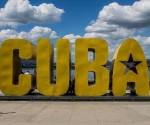
They should know this. The manuals prescribing devious “soft” coups are not recommended in Cuba; the people quickly intuit false gestures and detest traitors. The Trump administration took aggression to such an extreme in 2019 that President Miguel Díaz-Canel, when bidding farewell to the year, said: “They threw us to our death, and we are alive.”
News »
Some 15 U.S. cities request Cuban healthcare collaboration
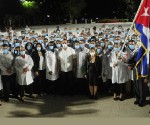
The absurd inclusion of Cuba in the U.S. State Department list of countries it considers to be sponsors of terrorism, a unilateral decision by former President Donald Trump, has generated condemnations from many countries, organizations and personalities around the world, including the U.S. The Seattle City Council (Washington state) requested that President Joe Biden reverse the inclusion of Cuba on the spurious list.
News »
A laborious but positive review for the White House
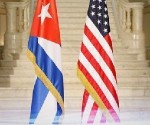
Last week, the White House spokesperson announced the will of the Joe Biden government to review US policy toward Cuba, the course of which was notably excoriated by the previous administration. After the numerous steps in the right direction taken in the second term of Barack Obama – in order to establish relations between the two nations despite political and ideological differences – the Trump administration disrupted everything that had been done and frayed relations by maximum possible level.
News »
Cuban patriots, wherever they live, know the blockade is criminal
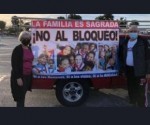
President Miguel Díaz-Canel thanked the Cuban émigré community in the United States, who took the lead this Sunday, January 31, in a caravan to denounce the blockade imposed on our country. On his Twitter account, the President emphasized that Cuban patriots, wherever they live, understand that the hostile U.S. policy is a crime against the people of the island, writing, “Cuba thanks its emigrant sons and daughters for the Bridges of Love caravan.”
News »
Cuban president is grateful for solidarity against US blockade
Cuban President Miguel Diaz-Canel on Wednesday expressed gratitude for the international support against the US blockade, and shared a photo of US actor Tyrese Gibson, who favors an end to that hostile policy. ‘Whoever knows and shares with our noble and industrious people, understands that the blockade must cease. Cuba is grateful for the solidarity,’ the president wrote on his Twitter account.